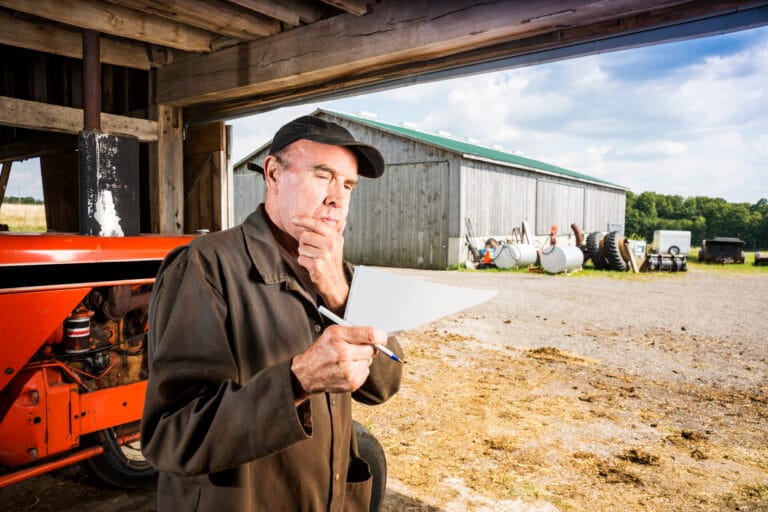

If you want to understand why founders fear farm succession, it helps to hear it from someone who lived it. So for this one I sat down with my husband, Kirk Olson, who came back to his family’s operation after teaching ag for about eight years and spent the next two decades working through exactly these fears with his dad. We landed on three honest reasons founders avoid the conversation: losing control, fear of change, and conflict.
Here’s the myth we want to debunk first: if we talk about it, they’ll think I want them gone. Actually, it’s the opposite. Talking about it means you care, you want clarity, and you want to be part of the plan instead of left in the dark. If you’ve seen what happens when families never have these conversations, you already know the cost of silence.
The short version:
- Founders avoid succession for three reasons: control, fear of change, and conflict.
- Starting the conversation usually dissolves the tension, because the other side is dreading it too.
- Ask direct questions. The answer is either an answer or “none of your business,” and both tell you where you stand.
- Fair isn’t always equal. Don’t divide the farm; equalize another way.
Listen to this episode: Ep. 3 – 3 Reasons Founders Fear or Avoid Farm Succession Planning
Reason 1: Giving Up Control of the Farm
The first fear is control, and it often repeats down the generations. Kirk watched his grandpa hold onto things, then his dad took over, and when Kirk moved in, his dad didn’t want to give up control either. As Kirk put it, his dad was afraid that if he wasn’t making the decisions, he wasn’t really farming.
Early on, Kirk was expected to ask before he sold grain, decided what to plant, or looked at buying a vehicle or a piece of equipment. He finally had to say he appreciated the help but didn’t need it, because being second-guessed was undermining him. It took slow, steady steps over 22 years. You keep talking, and you have to prove it to them, because if you don’t show them, they won’t believe you.
Reason 2: Fear of Change
The second fear is change, and it sounds like “this is the way we’ve always done it.” Kirk’s philosophy was the opposite: if you don’t try, you won’t know; if you don’t make a change, you won’t grow. He brought techniques back from working other farms and going on the harvest run down south.
Every idea got a “no” first. A draper head was “too much maintenance,” until they got one and never went back to a rigid header. A semi supposedly needed a CDL, until Kirk pointed out you don’t on a farm as long as you stay within 150 miles. Then came the grain cart and the swing-away auger that made the whole operation faster and easier. As Kirk said, nobody else went to the moon either, and somebody’s got to be first. If you’re not innovative in your own business, somebody else will beat you to the punch.
Reason 3: Conflict Avoidance
The third reason is conflict. Owners avoid the conversation because they fear being forced out sooner, or that it’ll spark family tension. So they kick the stone down the road: “we’ll get to that.” But as Kirk likes to say, someday is not a day of the week. You have to pull up your big boy pants and go talk to them.
Here’s what surprised us: when we finally opened it up, the tension just dissolved, because Kirk’s parents had been dreading it as much as we were. They were relieved we were thinking about it and that they wouldn’t have to pressure us. We had that conversation at the kitchen table, and it went smoothly.
Ready to start the conversation at your kitchen table?
The hardest part is starting. My free resource library has conversation guides and worksheets to help you ask the right questions without the fight.
Flip the Table: Questions Successors Should Ask
We also turned it around: what should the next generation ask so they’re better prepared? Start with the big one: how long are you planning to farm? Kirk’s dad finally gave a clear number, he’d farm until 80. Knowing that let us put a real plan in place around our finances, land rents, and the operation.
Then ask how the buy-in will work. Do you buy it from a trust, or from your parents, and is it a contract for deed or a loan? Most families spread the purchase out over time rather than mortgaging everything at once, which also helps avoid a big capital gains hit. Ask directly. All you can get is an answer or “none of your business,” and both are an answer.
Fair Isn’t Always Equal: Don’t Divide the Farm
Kirk has four siblings, and none of them farm. That raises the hardest question: how do you treat everyone fairly? Fair isn’t always equal. The farming child pays for the farm, but they also carry years of sweat equity the off-farm siblings don’t.
And here’s the warning we can’t say strongly enough: the worst thing you can do is divide the farm up among the kids. We’ve watched it too many times around here, a farm split into quarters, the siblings don’t get along, and next thing you know an operation drops from 3,000 acres to 1,500. Keep the farm together. Equalize with cash or a life insurance policy instead, and consider a first right of refusal for the farming child. At the end of the day, you’re not just passing acres, you’re passing trust.
Stuck on one of these three fears?
Book a free discovery call with me and let’s work through the control, change, or conflict that’s keeping your family’s plan on hold.
Frequently Asked Questions
Why do farm founders avoid succession planning?
In our conversation, Kirk and I landed on three honest reasons: they fear losing control, they fear change, and they avoid conflict. Underneath all three is a myth, that talking about it means you want them gone. It actually means you care and want to be part of the plan.
How do you get a parent to give up control of the farm?
Slowly, and by proving it. Kirk’s dad wanted to approve grain sales, planting, and equipment for years. It took steady steps over 22 years of showing, not just telling, before the control shifted. You keep talking, and you demonstrate that you can handle the decisions.
Should you divide the farm equally between siblings?
No. Fair isn’t always equal. The worst thing you can do is split the farm into quarters among kids who don’t all farm; we’ve seen operations shrink from 3,000 acres to 1,500 that way. Keep the farm together and equalize with cash or life insurance instead.
What questions should successors ask their parents?
Start with how long they plan to farm, then how you’ll buy in, whether through a trust, a contract for deed, or a loan spread out over time to limit capital gains. Ask directly. The answer is either a real answer or ‘none of your business,’ and both tell you where you stand.