Ask me what the most important life skills kids learn on a farm are, and I won’t start with tractors. I’ll start with responsibility, work ethic, and knowing how to look around and see what needs doing. For this episode I got to sit down with my two favorite people to prove it: my daughters, Marv, who’s 20 and in nursing school, and Ole, who’s 17 and a senior in high school. They’re the fifth generation on our family farm, and they grew up hauling buckets, showing sheep, and running grain cart long before most kids fill out a first job application.
This one is a little different from my usual talk about the mechanics of a transition. It’s about the people we’re raising to carry a legacy that’s more than 100 years in the making.
The short version:
- Farm kids learn responsibility because something is always depending on them.
- Work ethic and self-reliance come from doing real jobs, not pretend ones.
- The wood shop and the grain cart teach hands-on skills their peers don’t have.
- They absorb money and business sense just by being in the room.
Listen to this episode: Ep. 4 – Growing Up On The Farm
Responsibility: Something Depends on You
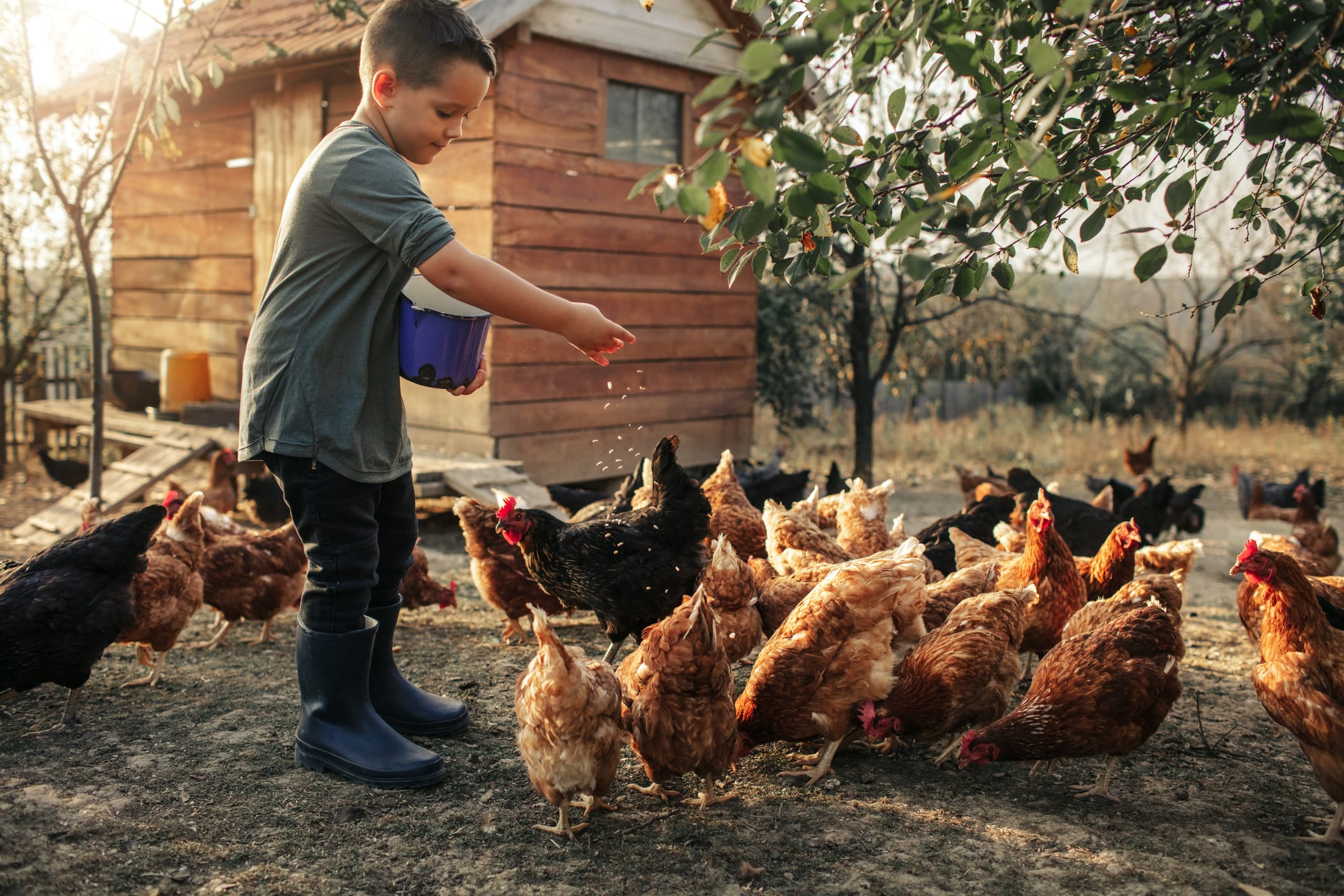
Marv put it simply: no matter the weather, you take care of your animal. Just because it’s cold doesn’t mean you skip chores. Even after coming home from cross-country practice having run eight miles, she still had to go walk the sheep, because something else was depending on her and she couldn’t let it down.
Ole showed Hampshire Cross lambs in 4-H, and they became so tame they were like her babies, or maybe like dogs, by the end of summer. There was the state-fair year someone left a gate open and the lambs got loose, and they finally caught them in the horse barn. And there were the spring snowstorms with no electric waterers, when the girls pulled on snow pants and hiked up the hill through drifts to break ice and fill buckets. That’s responsibility you can’t teach in a classroom.
Work Ethic and Self-Reliance
Here’s the one I’m proudest of. Ole told me farm life gave her a work ethic most people don’t have, that she can start something without being told, see that it needs doing, and just do it. As a former manager, that’s exactly what I appreciate: you shouldn’t have to be asked to work when you can look around and see what needs to be done.
Self-reliance comes the same way. When my husband first put Marv on the grain cart, he said he’d set up the auto-steer so she wouldn’t hit the header. It didn’t work out that way, so he threw her to the wolves and told her to find a line in the stubble and aim straight. As she said, it taught her you have to teach yourself things, believe in yourself, and never fully rely on technology, because you never know when it might not work.
Want to capture your family’s story for the next generation?
The values a farm teaches are worth writing down. My free resource library has worksheets to help you document your family’s history, values, and lessons for the kids who’ll carry it forward.
Hands-On Skills From the Wood Shop and the Field
My husband is a former ag teacher and our resident carpenter, so the girls learned to build. They started with step stools with their names on top, Marv’s painted purple, Ole’s powder blue, and worked up to harder projects: a twisted shelf, a bed, a live-edge river-wood mirror. He made sure they knew every tool and why they used it, and nobody’s lost a finger yet.
Marv says her standout skill is reading a tape measure and doing quick math, something she’s found most people her age can’t do. And out in the field, the girls read their dad’s hand signals so well that when they load trucks, the truck driver is left wondering what just happened while the girls already know exactly what he wants.
Money and Business Sense
Because my husband and I are both business-minded, and I spent years as a banker, the girls grew up hearing us talk markets and equipment. Marv came away understanding that business isn’t always on the ups. Like the grain market, it has ups and downs, so you decide when and how much to sell, and you don’t get greedy and buy just because you have the money. You wait for the right time and stay patient.
Ole put the personal-finance version plainly: don’t spend all your money just because you have it. Save it, and use it for what you’ll actually need in the future.
The Legacy They Want to Carry Forward
When I asked what legacy they’re part of, Marv called it a pretty great one, a farm that’s been in the family for years and years and still produces a great crop because of the people who’ve operated it. She wants to someday bring her own kids back to experience the legacy left behind.
Whether they come back to farm, marry into it, or build a life somewhere else, growing up this way prepared them. It isn’t an easy life, but there’s high reward in it. Because at the end of the day, growing up on a farm isn’t just about chores or harvest. It’s about resilience, teamwork, and being part of something bigger than yourself, and if you’re lucky like I am, sharing it with the next generation.
Thinking about the next generation on your farm?
Book a free discovery call with me and let’s talk about how to hand down not just the acres, but the values and the plan that keep a farm in the family.
Frequently Asked Questions
What life skills do kids learn growing up on a farm?
In my daughters’ words: responsibility, work ethic, self-reliance, money management, and hands-on skills like driving grain cart, woodworking, and reading a tape measure. The through-line is that something is always depending on them, so they learn to show up and get it done.
How does farm life build a work ethic?
By giving kids real jobs, not pretend ones. Ole told me she can see what needs doing and start it without being asked, which is exactly the habit I valued as a manager. When chores have to happen regardless of weather or how tired you are, work ethic becomes second nature.
What does 4-H and showing livestock teach kids?
Responsibility and consistency. Ole raised Hampshire Cross lambs and cared for them all summer, in every kind of weather. Even the chaos, like the lambs getting loose at the state fair, becomes a lesson in staying calm and following through.
How do farm kids learn about money and business?
Mostly by being in the room. My girls grew up hearing my husband and me talk markets and equipment, so Marv learned that business has ups and downs and that patience beats greed, while Ole learned to save rather than spend just because she could.